The investigation, episode by episode.
Supply Chain Visibility: Table Stakes Is Only the Starting Line (with Grant Ritchie)
Grant Ritchie of Freedom Trans USA on supply chain visibility: why table stakes is only the starting line for better decisions.
In the Wild
Plan · Source · Make · Deliver. Real use cases tested, including what had to be true, and where it broke.
Supply Chain Transformation: AI Can't Enforce Culture (with Sanchay Roy)
Sanchay Roy on supply chain transformation: AI can't enforce culture, but it can capture frontline operator knowledge before the retirement clock runs out.
Implementing AI in Supply Chain: Stop Bolting AI Onto the Old Process (with Narahari Rao)
Narahari Rao of SLB on implementing AI in supply chain: why bolting AI onto old processes just builds a better horse-drawn carriage.
Foundations
Definitions, leadership, culture, data, governance, and the economics that determine whether autonomy is credible.
Agentic AI: Every AI Project Is a Data Project (with Traey Hatch)
Traey Hatch of New Math Data on agentic AI: why every AI project is really a data project, and what agents need before they can run in production.
AI ROI in Supply Chain: Autonomy Is an Asset, Not an Expense
AI ROI in supply chain is too often measured on cost alone. Why autonomy is an asset that pays out in decision quality, velocity, resilience, and new markets.
AI Governance in Supply Chain: Rocket Ship, Not a Rulebook (with LeAnne Coulter)
LeAnne Coulter on AI governance in supply chain: why the word "pilot" invites pocket vetoes, and where the real return on AI actually hides.
Supply Chain Data Readiness: Why Perfection Is the Wrong Benchmark for AI (with Brian Reed)
Brian Reed of Oracle on supply chain data readiness: why perfection is the wrong benchmark for AI, and what good data really demands on the road to autonomy.
Making AI Work in Supply Chain: Trust Is the Real Strategy (with Chris Pitre)
Chris Pitre of Softway on making AI work in supply chain: trust, psychological safety, and the culture work that decides whether pilots scale or stall.
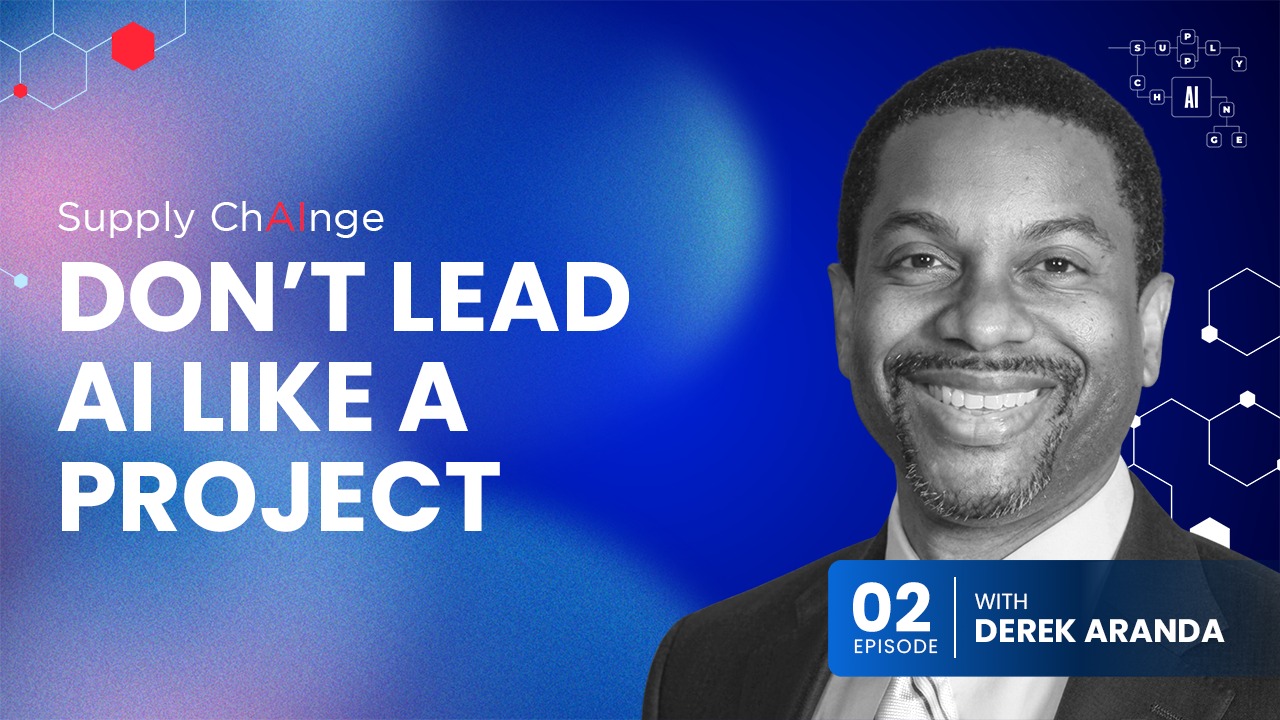
Don't Lead AI Like a Project: A Leadership Guide to AI and Autonomy in the Supply Chain
Supply chain leadership decides whether AI works, not the tool: why autonomy demands a different kind of leader, and the two choices behind it.
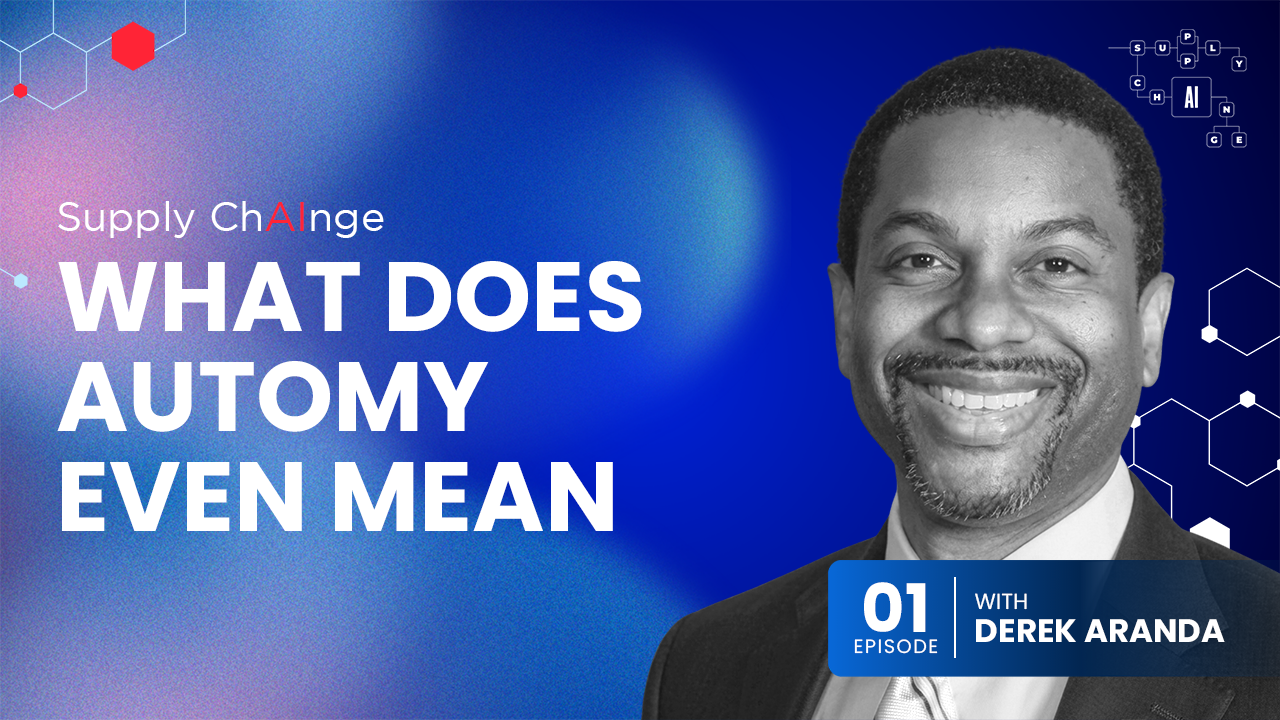
Autonomous Supply Chain: Defining It Before You Build It
Defining the autonomous supply chain before you build it: a five-level pyramid from automation to autonomous, and why bounded autonomy is the realistic target.
“The rise of cognitive and agentic AI may create a credible path toward more autonomous supply chains. But only if leadership, culture, governance, data, and economics evolve together.”
This podcast doesn't assume autonomy is inevitable, desirable, or universally appropriate. Each episode tests the thesis against operator experience, executive decision-making, and system-level constraints.
Framing → constraints → real outcomes → judgment.
Foundations
Definitions, leadership, culture, data, governance, and the economics that determine whether autonomy is credible.
In the Wild
Plan · Source · Make · Deliver. Real use cases tested, including what had to be true, and where it broke.
Decisions
Where autonomy is the wrong answer, what mattered more, and how leaders should decide what to automate, augment, or leave human.
CSCOs, CIOs, CFOs, senior operations leaders, and the directors and practitioners actually implementing this. Built for the tension between short-term ROI pressure and long-term operating-model change.
Derek Aranda
Derek Aranda spent over two decades as a global executive operating across commercial, supply chain, and digital transformation roles at scale. That span across the full value chain shapes his lens: the decisions, incentives, trust, economics, and governance that determine whether technology actually works inside real supply chains.

Operator with a story?
Pitch a guest, a topic, or a story that tests the thesis. Guests are selected for real experience.